












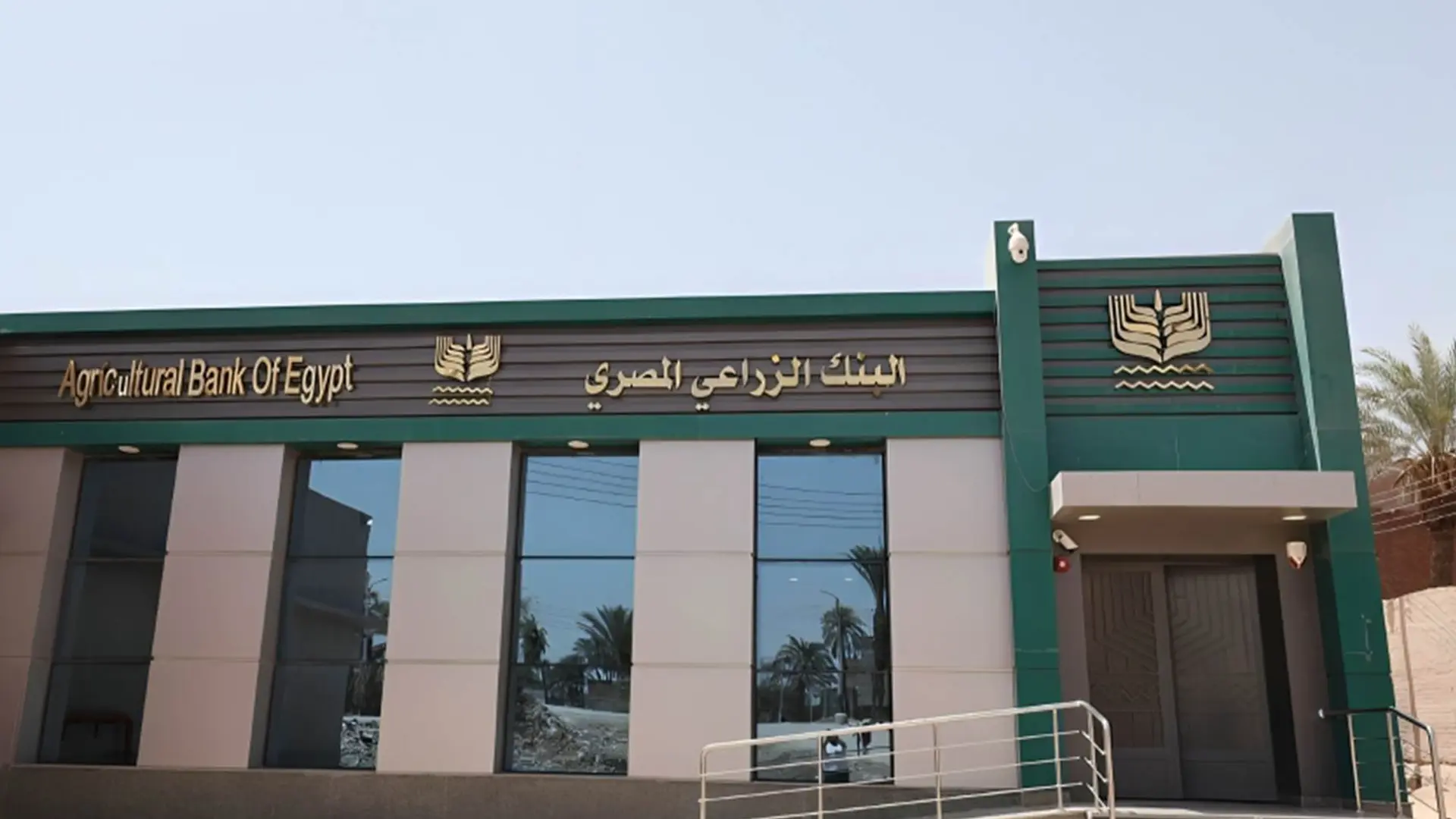
How Agricultural Bank of Egypt federated 26 branches with Access360 Helix
Overview
Agricultural Bank of Egypt is a wholly state-owned public-sector bank headquartered in Giza in the Greater Cairo region. Founded in 1930, it is one of the largest agricultural banks in the Arab world and the most widely distributed bank in Egypt, with more than 1,200 branches and village banks across the country’s governorates.
Alongside agricultural and rural development finance, the bank provides retail, corporate, SME, and microfinance banking services.
For this project, Agricultural Bank of Egypt needed to bring 26 main and regional branches under a common access control environment while allowing each branch to continue operating independently when connectivity to the central location was unavailable.
IDCUBE implemented Access360 Helix using a federated architecture that combines centralized administration with local branch-level operation.
Agricultural Bank of Egypt deployment at a glance
Federated access control across geographically distributed banking locations.
- 26 main and regional branches
- Dedicated on-premises server at every branch
- One centralized master server
- Centralized access and user administration
- Master-defined configuration templates
- Local branch operation during network disruption
- Synchronization with the master when connectivity returns
- Centralized event visibility and reporting
- Cybersecurity compliance requirements addressed through the Access360 Helix environment
These capabilities reflect the project scope documented for Agricultural Bank of Egypt.
The challenge
Managing access across geographically distributed bank branches creates a different operational challenge from securing a single facility.
Agricultural Bank of Egypt needed the 26 branches in scope to operate as part of one centrally managed environment. User management and access configuration needed to be defined centrally and then applied consistently across locations.
The bank wanted a master configuration that could be created once and distributed through templates, so that a role would retain the same definition at every branch.
Before federation, access administration was distributed. Each branch was managed independently, with no single location from which administrators could configure, monitor, or report across the complete deployment.
That also meant a policy change had to be repeated branch by branch.
At the same time, centralization could not make branch operation dependent on continuous connectivity to the command center.
The bank’s network extends into rural governorates. If connectivity between a branch and the central system became unavailable, local access control still needed to continue operating.
The deployment also needed to meet the bank’s cybersecurity compliance requirements.
Operational requirements included
- Centralizing administration across 26 branches
- Defining users and roles once at the central level
- Applying common configurations through templates
- Maintaining consistent access policies across branches
- Providing centralized monitoring and reporting
- Allowing branches to operate during loss of central connectivity
- Synchronizing branch information after connectivity is restored
- Supporting cybersecurity compliance requirements
Agricultural Bank of Egypt therefore needed more than 26 independent access control deployments. It needed a federated architecture that could combine centralized governance with local operational continuity.
The solution
IDCUBE deployed Access360 Helix in a federated architecture across the 26 branches.
Each branch operates its own dedicated on-premises server. The server maintains the branch’s local population and enforces access policy locally, while every branch server connects back to a central master server.
This architecture allows administration and visibility to remain centralized without making individual branches dependent on a permanent connection to the central system.
Federated access control architecture
Access360 Helix established a master-and-branch architecture for the distributed banking environment.
The master server acts as the central point for defining configuration and receiving information from individual branches.
Each of the 26 branch servers retains the information required to enforce policy locally.
This gives Agricultural Bank of Egypt a common access control environment while preserving branch-level operation.
Centralized policy management
Access policies and templates can be created at the master level and distributed to branch servers.
Instead of recreating the same role independently at multiple locations, branches inherit centrally defined templates.
This creates a consistent definition of roles and permissions across the deployment and reduces repetitive branch-by-branch configuration.
Independent branch operation
A distributed banking network cannot always assume uninterrupted connectivity.
If a branch loses its connection to the central server, its dedicated Access360 Helix server continues operating locally and enforcing the policies already available at that location.
Branch operations therefore do not depend on a continuous live connection to the central system.
Synchronization after reconnection
When connectivity between a branch and the master server is restored, the branch reconnects with the federated environment and reconciles with the master.
This design combines local continuity with central administration rather than forcing the bank to choose between the two.
Centralized event visibility
Federation works in both directions.
Configuration and authority move outward from the master to individual branch servers, while events generated at branches move back toward the central environment.
The master therefore provides both the authoritative configuration and a consolidated record of activity across the deployment.
Cybersecurity and compliance
The deployment also had to address Agricultural Bank of Egypt’s cybersecurity compliance requirements.
The supplied case study identifies IDCUBE’s SOC 2 Type II, ISO 27001 and ISO 27018 certifications, GDPR compliance, and platform vulnerability assessment and penetration testing (VAPT) as measures supporting these requirements.
The impact
The federated Access360 Helix deployment gave Agricultural Bank of Egypt a more consistent way to manage access control across the 26 branches while maintaining local operating independence.
Centralized policy administration
Access policy can now be defined centrally and inherited by branch servers instead of being manually recreated at each location.
This reduces repetitive branch-level administration and helps maintain consistent configuration across the estate.
Unified reporting
Reporting no longer needs to be collected separately from all 26 branches.
Information from across the deployment can be queried through the master environment, allowing administrators to view the network centrally instead of requesting and reconciling individual branch reports.
Consistent access policies
A common authoritative definition of access permissions can govern all participating locations.
This helps reduce the configuration differences that can develop when individual sites are administered independently.
Centralized security visibility
The master environment consolidates events from the participating branches.
An event occurring at an individual branch can therefore be viewed and investigated centrally instead of being visible only from the location where it occurred.
Operational continuity
Branch staff remain able to operate even if connectivity with the central environment is interrupted.
Local branch servers continue supporting branch operations and reconnect with the master when the network connection returns.
Easier branch expansion
The federated model also provides a repeatable approach for adding locations.
A new branch can join the federation by connecting its server and inheriting the templates already defined at the master rather than being configured as an entirely independent access control environment.
Conclusion
Agricultural Bank of Egypt needed centralized access control across geographically distributed branches without making local security dependent on continuous network connectivity.
IDCUBE addressed this requirement through a federated Access360 Helix architecture in which each of the 26 branches operates its own dedicated on-premises server while connecting to a common master server.
Policies and templates can be defined centrally and inherited by branches, while branch events flow back to the master for consolidated visibility and reporting. If connectivity to the center is interrupted, individual branches continue operating locally and reconcile with the master after the connection returns.
The result is a distributed access control environment that combines centralized governance, consistent access policies, consolidated reporting, local operational continuity, and a repeatable model for adding branches.
Frequently asked questions
What access control platform did IDCUBE deploy for Agricultural Bank of Egypt?
IDCUBE deployed Access360 Helix using a federated architecture across 26 main and regional branches. Each branch operates its own dedicated on-premises server and reports to a central master server.
How many Agricultural Bank of Egypt branches are covered by the deployment?
The project covers 26 main and regional branches of Agricultural Bank of Egypt.
How does Access360 Helix centrally manage multiple branches?
Configuration templates are created at the master level and distributed to branch servers. Roles can therefore be defined centrally and inherited by individual locations instead of being rebuilt separately at each branch.
What happens if a branch loses connectivity with the central server?
The branch continues operating using its dedicated local server. When connectivity returns, the branch reconnects and reconciles with the master server.
Can administrators view events from different branches centrally?
Yes. Events from the branch servers are sent back to the master environment, creating a consolidated record across the participating locations.
How does the deployment help maintain consistent access policies?
The master server provides an authoritative configuration. Templates and role definitions can be distributed to branch servers instead of being independently configured at every location.
How does the architecture support future branches?
A new branch can connect a server to the federation and inherit the templates already in force instead of being configured as a completely independent system.
Which cybersecurity and compliance measures are referenced for this deployment?
The supplied case study references IDCUBE’s SOC 2 Type II, ISO 27001 and ISO 27018 certifications, GDPR compliance, and VAPT in relation to the bank’s cybersecurity compliance requirements.