












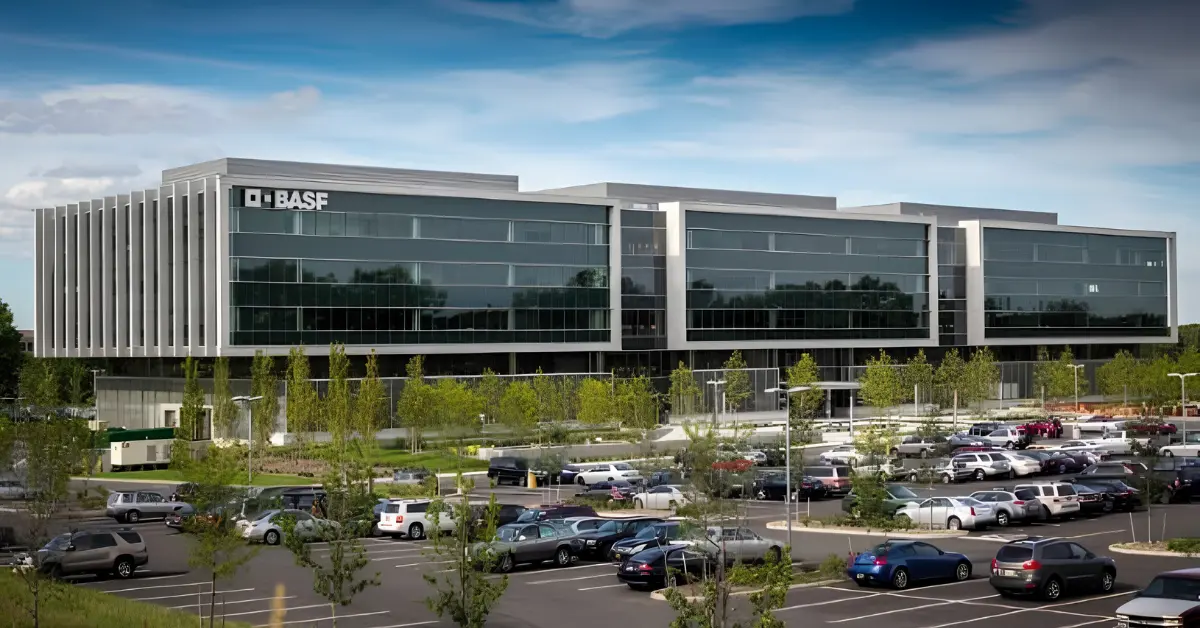
How BASF Centralised Access & Identity Management Across 35 Sites with IDCUBE
Overview
BASF is one of the world’s leading chemical companies, with operations spanning 93 countries and 234 production sites worldwide. Managing physical access, workforce identities and facility security across an organisation of this scale requires more than independent access control systems; it requires a common framework that can adapt to different sites while maintaining central governance.
Across BASF’s manufacturing and R&D operations in Southeast Asia, IDCUBE implemented a centralized access and identity management environment using Access360.AI.
The solution connects 35 BASF manufacturing and R&D sites, supports 46,000+ users, and handles 60,000+ access events per site per day. The environment is centrally managed from the BASF Singapore Data Centre, without the need for local servers or middleware at individual sites.
BASF Deployment at a Glance
Integrated access, attendance, visitor and contractor management
- 35 manufacturing and R&D sites connected
- 46,000+ users supported
- 60,000+ access events per site per day
- Central management from the Singapore Data Centre
- Integration with Active Directory, SAP HRMS and BASF’s e-mail environment
- Support for Mercury, VertX and IDEMIA devices
The Challenge
BASF needed to create a common access and identity management framework across facilities with very different operational requirements.
An R&D centre, manufacturing plant and corporate environment may each have different workflows, user populations, access policies and security requirements. BASF therefore required one enterprise platform that could provide central governance without forcing every location into an identical operating model.
Another priority was technology flexibility. BASF wanted an open-platform architecture that could work with best-of-breed hardware and software rather than restrict individual facilities to a closed technology ecosystem.
The platform also needed to align with BASF’s stringent IT security requirements while supporting users across multiple geographical locations through multilingual interfaces.
Operational requirements extended beyond door access. BASF needed to manage:
- Employee and contractor attendance
- Shift-based manufacturing workforce operations
- Attendance information for payroll processes
- Employee and visitor access across multiple checkpoints
- Real-time occupancy and headcount
- Visitor and contractor lifecycle management
- Vehicle access
- Secure credential issuance
- Site-specific workflows
- Future expansion without creating additional regional silos
Visitor management was particularly important because facilities needed reliable information about who was present on-site not only employees, but visitors and other authorised populations as well.
The challenge was therefore to combine physical access control, identity management, attendance, visitors, contractors and security intelligence within a centrally managed environment that could still adapt to individual BASF sites.
The Solution
IDCUBE addressed these requirements through a centralised Access360.AI architecture connecting BASF facilities across Southeast Asia.
Rather than deploying and maintaining independent application servers at every facility, the connected sites operate through the centrally managed environment in Singapore. This reduces dependency on separate local infrastructure while creating a consistent management layer across locations.
At the enterprise level, Access360.AI integrates with BASF’s existing e-mail server, Active Directory and SAP-based HRMS, helping physical access processes work alongside established identity and workforce systems.
The solution combines several IDCUBE applications within one environment:
Centralised Access Control with Access Master
Access Master provides the core access control management layer for users, credentials, access rules and facility access.
Administrators can manage enrollment, biometric registration, credentials, vehicles, access policies and reporting through the Access360.AI web interface.
The open architecture enables BASF sites with different physical security environments to connect through a common platform while supporting Mercury, VertX and IDEMIA technologies.
Secure Credential Issuance
IDCUBE’s Smart Issuance capability is used for secure credential printing and encoding.
The deployment supports DESFire EV2 credentials, helping strengthen credential protection and reduce the risk associated with card cloning or unauthorised credential duplication.
Workforce Attendance and Contractor Management
For manufacturing environments, workforce management must accommodate more than standard office schedules.
attendio5 supports shift-based attendance requirements, including contract employees and multi-shift manufacturing operations such as night shifts.
Contractor-management capabilities enable administrators to distinguish contractor populations, associate contractors with suppliers, maintain identity documentation and capture site-specific information through configurable fields.
Biometric devices can also support attendance capture in manufacturing environments, while customised workflows record relevant safety-training information.
Integrated Visitor Management
With ezvisit10, visitor processes become part of the same wider access environment.
Employees can plan meetings, allocate meeting rooms and pre-register visitors. Facilities can capture visitor information and photographs and issue appropriate visitor passes through a controlled workflow.
This connected approach helps BASF maintain greater visibility into employee and visitor presence across its facilities.
AI-Powered Security Intelligence
The deployment also incorporates AInsights to turn access and security data into actionable intelligence.
Within the BASF implementation, AInsights supports capabilities including alarm analysis and root-cause detection, interactive security dashboards, site-level vulnerability analysis and benchmarking, periodic security reporting and rapid threat identification.
By bringing access events and security information into a central analytical layer, teams gain greater visibility into potential vulnerabilities across distributed facilities rather than relying solely on isolated site-level records.
The Impact
The BASF implementation demonstrates how centralisation can improve security governance without removing the operational flexibility required by different manufacturing and R&D environments.
A Customisable Platform Within a Common Framework
BASF can accommodate site-specific requirements while maintaining a shared centralised architecture.
Capabilities created for local operational requirements can also be extended to other facilities where appropriate, reducing the need to repeatedly build isolated systems.
Stronger Risk and Information-Security Visibility
Centralised management supports more consistent implementation of IT security and privacy controls across connected facilities.
Combined with encrypted communications and AInsights-driven security intelligence, BASF gains greater visibility into vulnerabilities and potential threats, supporting more proactive security decision-making.
More Consistent and Reliable Records
Access and workforce records from distributed sites are transferred into the centrally managed environment.
This improves consistency of information across facilities and helps reduce dependence on locally maintained or fragmented records.
Reduced Infrastructure and Management Overhead
The central architecture eliminates the requirement for separate Access360 application servers or middleware at each connected site.
Combined with an open-platform approach that provides greater flexibility when selecting compatible technologies, this can simplify implementation, maintenance and long-term system administration.
Improved Compliance Readiness
Access control, visitor management, attendance and contractor workflows are brought together within a common environment.
Centralised records, security intelligence and reporting help support audit readiness and consistent operational governance across areas such as EHS, OHS, information security, privacy and applicable regulatory requirements.
Protection of Long-Term Technology Investment
Instead of creating multiple disconnected regional security platforms, BASF can extend a scalable access and identity management framework as requirements evolve.
The open architecture provides flexibility to accommodate different hardware environments and future capacity requirements, helping preserve existing technology investments while providing a path for expansion.
Conclusion
BASF’s access and identity management programme shows how a large industrial enterprise can move from site-specific security operations towards a more unified and centrally governed physical access environment.
By connecting 35 manufacturing and R&D sites across Southeast Asia, IDCUBE has enabled BASF to bring access control, workforce attendance, contractor management, visitor workflows, credential issuance and security intelligence into a common Access360.AI environment.
The result is not simply a central access control system. It is a scalable framework that connects physical identities, enterprise systems, security policies and facility operations while retaining the flexibility required by individual BASF locations.
For complex manufacturing organisations operating across multiple facilities, the BASF deployment illustrates how an open, integrated and centrally managed access architecture can improve visibility, simplify administration and create a stronger foundation for future expansion.
Frequently Asked Questions
What access control solution did IDCUBE implement for BASF?
IDCUBE implemented a centralised Access360.AI environment connecting BASF manufacturing and R&D facilities across Southeast Asia. The platform brings together access control, attendance, visitor management, contractor workflows, credential issuance and AI-based security intelligence.
How many BASF sites are connected through IDCUBE?
The implementation connects 35 BASF manufacturing and R&D sites across Southeast Asia and supports more than 46,000 users.
How many access events does the BASF system support?
The deployment is designed to support 60,000+ access events per site per day across the connected environment.
Which BASF enterprise systems integrate with Access360.AI?
The central Access360.AI environment integrates with BASF’s Active Directory, SAP-based HRMS and e-mail environment, helping connect enterprise identity and workforce processes with physical access management.
Does the BASF deployment support different access control hardware?
Yes. The implementation includes a mix of Mercury, VertX and IDEMIA technologies. This reflects BASF’s requirement for an open-platform approach that can connect different facility environments through a common management platform.
How does IDCUBE support visitor and contractor management at BASF?
IDCUBE integrates ezvisit10 for visitor workflows and provides contractor-management functionality for supplier mapping, identity records and configurable contractor information. The wider platform also supports visitor passes, employee and visitor headcount, attendance and access management.
How does AInsights help BASF improve physical security?
AInsights provides AI-driven security intelligence across access and alarm information. The BASF deployment uses analytical dashboards, vulnerability assessment, benchmarking, alarm analysis, security reporting and threat detection to give security teams greater visibility into risks across connected facilities.